Child & Teen Therapy in Visalia
Children don't always have the words for what they're carrying, but they show us through their play, their behavior, and their bodies. A child who is anxious, melting down, withdrawing, or struggling after a hard experience is communicating that something inside needs care.
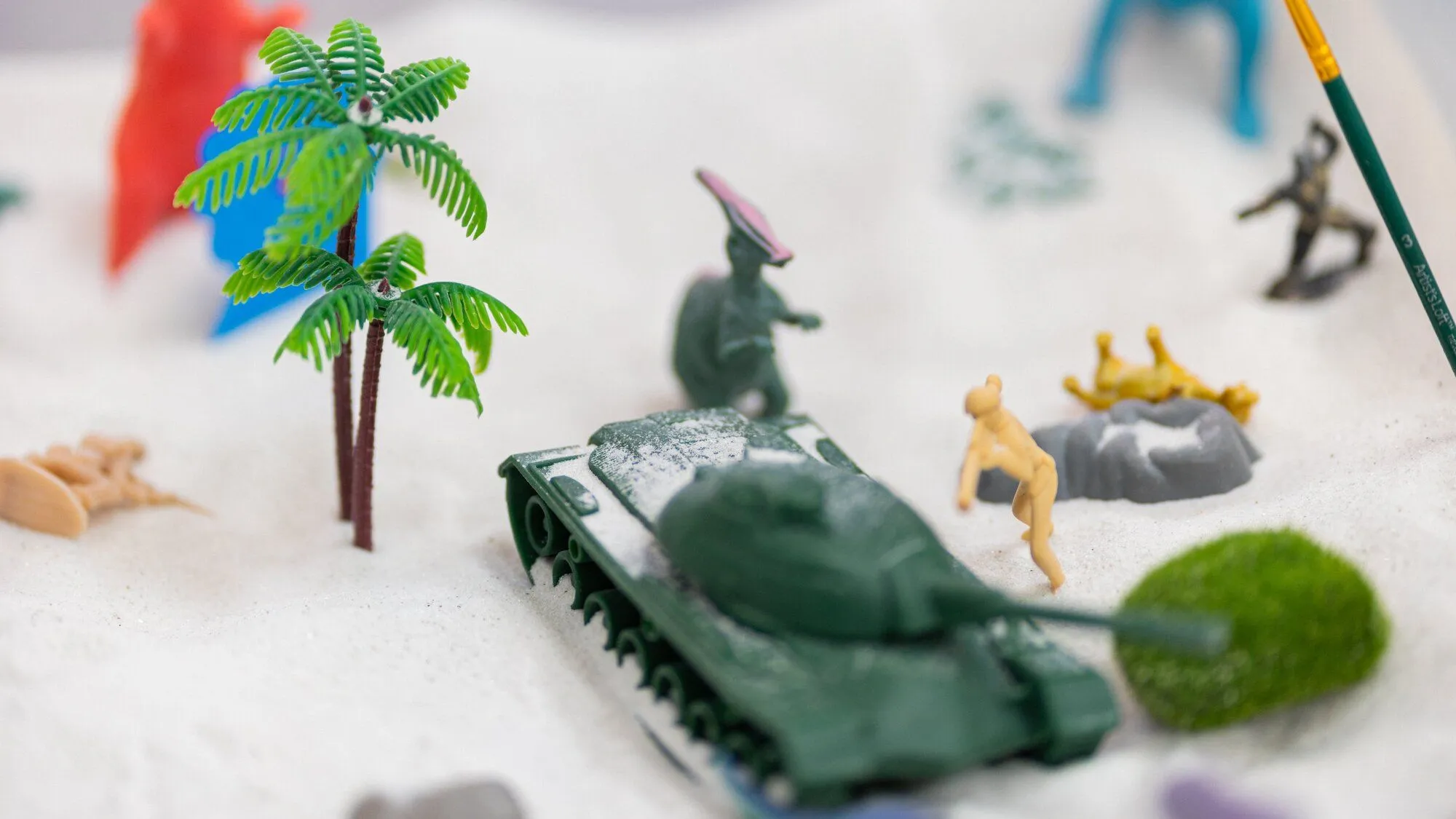
Using play therapy, sandtray, and expressive arts, I give children a language that fits them. In the safety of imaginative play, kids process big feelings, make sense of frightening experiences, and build the resilience to feel like themselves again.
Parents often reach out when their child is…
- Anxious, clingy, or overwhelmed by worry
- Having frequent meltdowns or big, hard-to-soothe emotions
- Struggling after divorce, loss, a move, or a scary event
- Withdrawn, sad, or not seeming like themselves
- Having a hard time at school or with friendships
The process
How therapy with children works
A room built for kids
Sand, miniatures, art materials, and toys aren't just play, they're the tools children use to externalize and work through what's happening inside.
Partnering with parents
You know your child best. We'll meet regularly so you understand what's unfolding and learn ways to support your child's nervous system at home.
Meeting trauma gently
For children who've experienced something frightening, I weave in trauma-informed and EMDR-based approaches adapted for young nervous systems, never forcing, always following the child's lead.
Growing real skills
Through our work, kids build emotional vocabulary, calming strategies, and the felt sense that they are safe, capable, and not alone.
The other side
What you may notice at home
Healing isn't about becoming someone new, it's about coming home to who you already are. Here's what clients often notice over time.
- Fewer meltdowns and easier transitions
- A child who can name feelings instead of acting them out
- More confidence at school and with friends
- Your kid, playful and connected, coming back
Common questions
What ages do you work with?+
I see children as young as 6, along with preteens and teens. The approach shifts with development, more play and sandtray for younger kids, more talk and creative work for adolescents.
How is play therapy actually therapy?+
Play is a child's natural language. Through sandtray scenes, stories, and art, children safely express and reorganize experiences they can't yet put into words. It's a well-researched, developmentally appropriate way to heal.
Will I be involved in my child's therapy?+
Absolutely. Parents are essential partners. We'll check in regularly so you understand your child's progress and feel equipped to support them between sessions.
Begin when you're ready
You don't have to navigate this alone.
Reaching out is the hardest part. Schedule a free 15-minute consultation and let's see if we're a good fit, no pressure, just a conversation.